
Research
We study the coupled processes of heat transfer, fracture mechanics, and propulsion materials at gas–wall interfaces, combining experiments, theory, and materials characterization to design architectures that survive extreme environments.
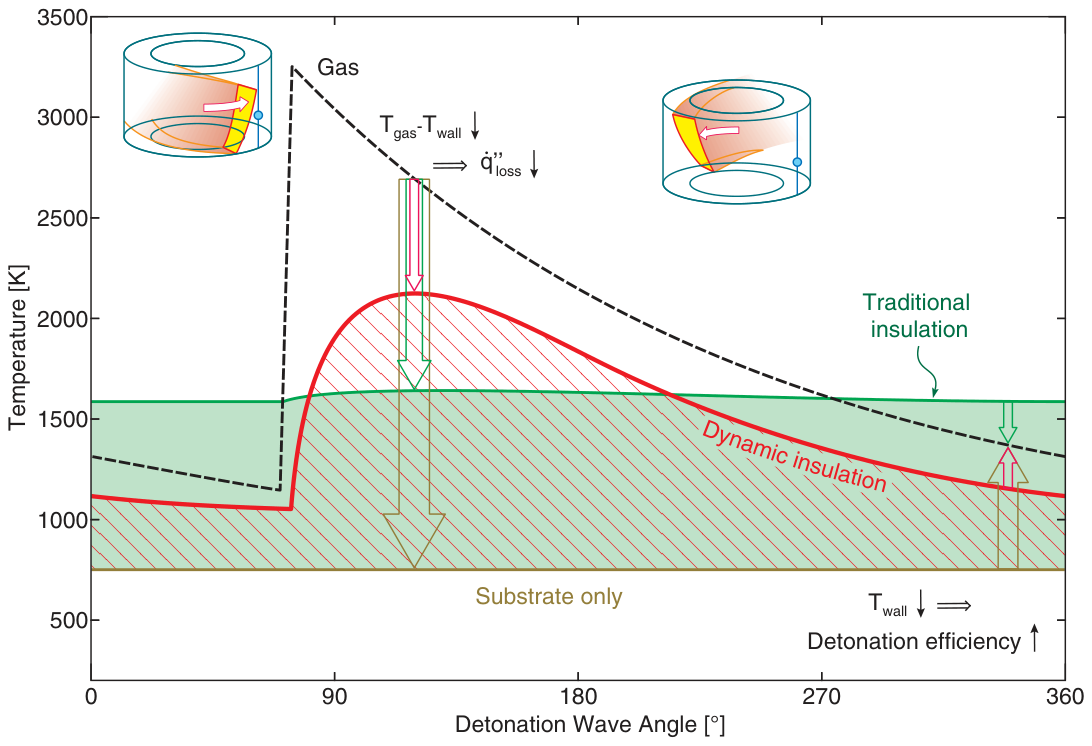
Wall surface temperature across one detonation cycle. A dynamic coating (red) tracks the gas instead of sitting at a fixed elevated temperature, shrinking the difference that drives the heat loss.
A rotating detonation engine burns its propellant behind a shockwave that laps the combustor annulus thousands of times a second. The pressure gain is attractive; the wall heat flux is brutal, and it arrives as a spike rather than a steady load. Most engines survive this only by cooling the wall so hard that the efficiency benefit is spent on the cooling system.
We take the opposite approach: design the wall so that its surface temperature can follow the gas. A coating with a short enough thermal time constant heats and cools within a single detonation period, shrinking the gas-to-wall temperature difference that drives the loss — an idea we call dynamic heat insulation. Because the wall also runs cooler during refill, it is less likely to pre-ignite the incoming mixture.
Our work in this area includes:
- Dynamic heat insulation: Low-conductivity, low-heat-capacity coatings whose thermal time constant is matched to the detonation wave frequency, reducing cycle-mean heat loss and the parasitic deflagration that follows a hot wall.
- Materials evaluation: Putting candidate wall architectures into a real detonation environment and ranking them on the metrics that actually govern engine design.
- Active cooling: Flow and heat transfer in additively manufactured mini channels, which make the backside boundary condition a design variable rather than a constraint.
- Design scaling: Non-dimensional groups that collapse coating properties, thickness, and wave frequency onto a single measure of coating effectiveness.
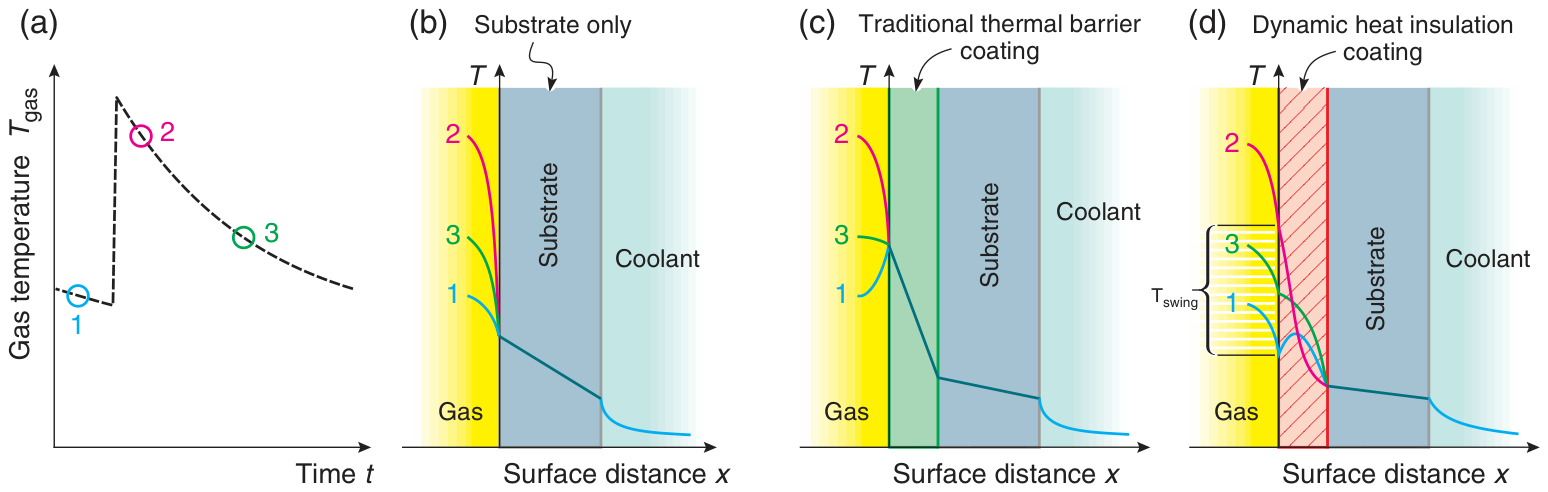
Three Wall Architectures
The same detonation produces very different wall behaviour. Only the dynamic coating develops a real temperature swing at the surface while leaving the substrate quiet.
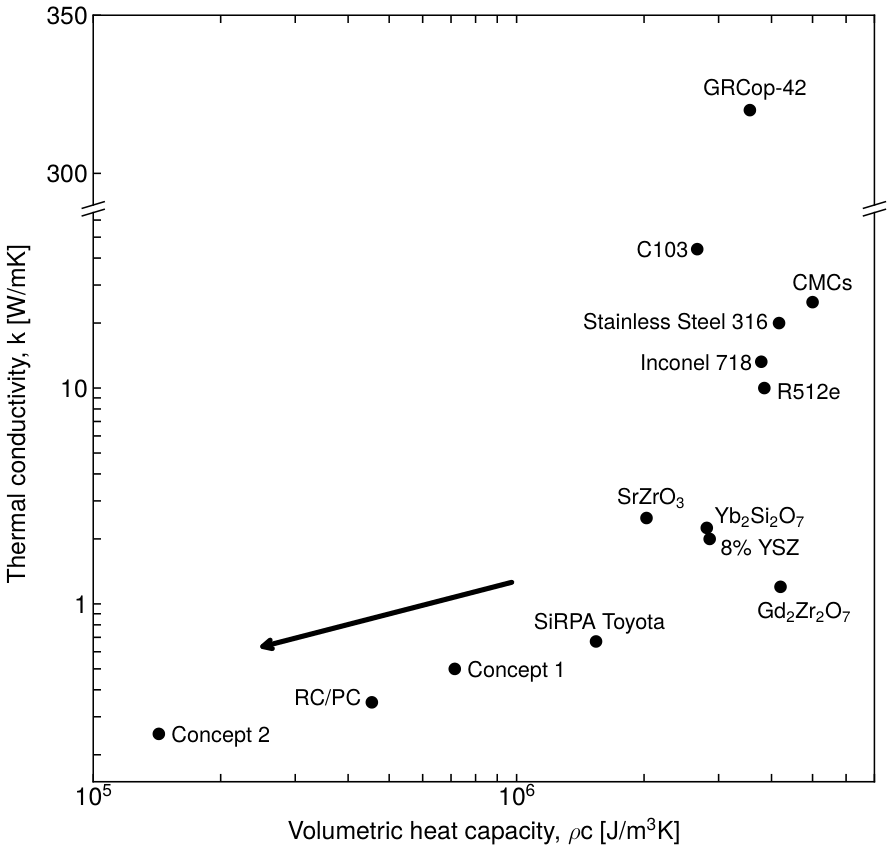
Where the Materials Are
Engine materials in service today cluster at high heat capacity. The arrow points to the property combination a dynamic coating needs, and to the gap new materials have to fill.
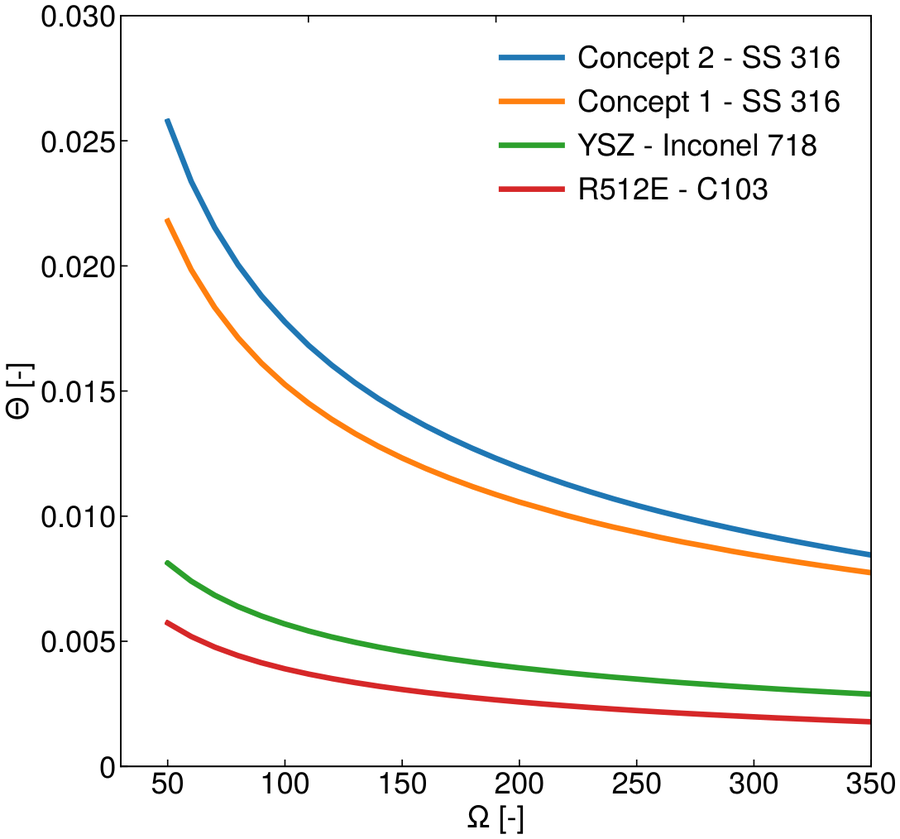
One Scaling Law
Coating effectiveness collapses onto the product of thermal time constant and wave frequency, which turns a materials search into a single number to design against.
Selected work
- D. Vrocharis and G. Koutsakis, “Concept of Dynamic Heat Insulation for Rotating Detonation Engines,” AIAA SciTech Forum (2026). 10.2514/6.2026-1642
- D. Vrocharis and G. Koutsakis, “Flow and Heat Transfer Characteristics of Additively Manufactured Mini Channels,” ASME Turbo Expo (2025). 10.1115/GT2025-153071
- G. Koutsakis, “Dynamic Heat Insulation Towards Pressure Gain Combustion,” U.S. Provisional Patent Application 63/763,575 (2025).
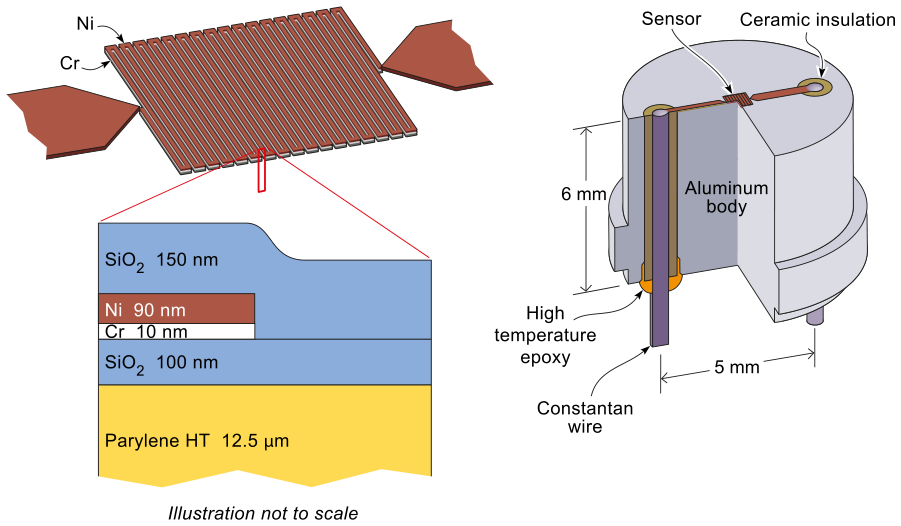
An architected-wall surface temperature sensor. The insulating layer beneath the sensing element is chosen so that the temperature swing it sees is amplified — signal gained without adding noise.
You cannot design a wall you cannot predict, and you cannot validate a prediction you cannot measure. This thrust covers both halves: analytical methods that give surface temperature and heat flux in layered walls without a full conjugate simulation, and the instrumentation needed to check them against a real engine.
The modeling side rests on a matrix formulation in the Laplace domain that yields a wall response function; the surface temperature is then a convolution of that function with the applied heat flux. It is exact, it handles arbitrarily many layers, and it is fast enough to sit inside a parametric study or a full vehicle drive cycle rather than a single cycle.
Our work in this area includes:
- Unsteady multilayer conduction: Analytical and semi-analytical solutions for surface temperature and heat flux in coated walls under rapidly varying thermal loads.
- Heat flux instrumentation: Thin-film resistance sensors built on an engineered insulating layer that amplifies the measured temperature swing, patterned by lithography and by aerosol jet printing.
- Inverse heat conduction: Recovering surface heat flux from a measured temperature, including the filtering needed to keep the inversion from amplifying noise.
- Computational efficiency: Response-function methods that reach finite-difference accuracy orders of magnitude faster, which is what makes drive-cycle and design-space studies possible.
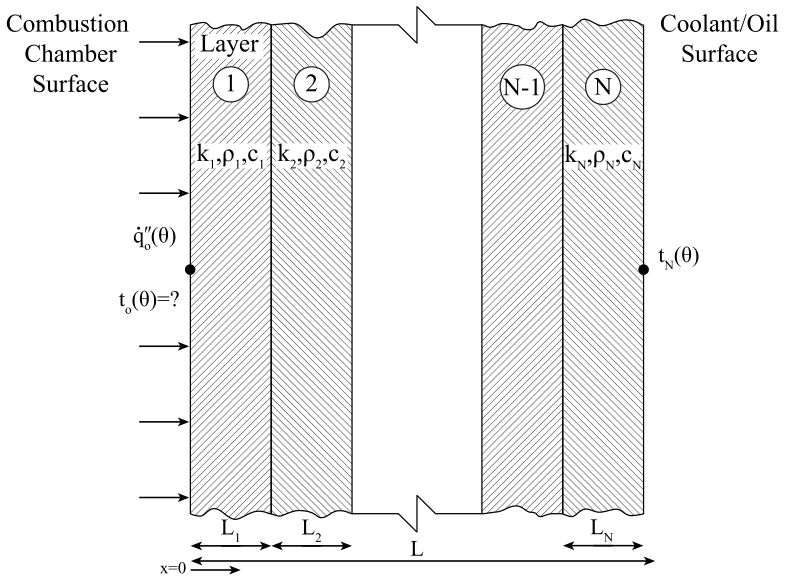
The Model Problem
An arbitrary stack of layers, a transient heat flux on one face and a coolant temperature on the other. Solving this exactly, and quickly, is what everything else is built on.
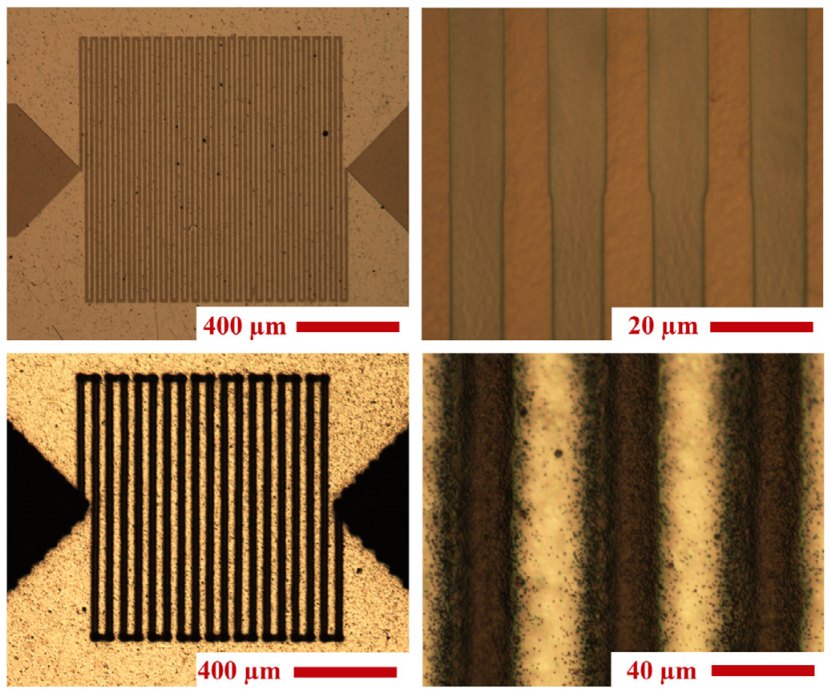
Fabricated Sensors
Lithography gives crisp features; aerosol jet printing tolerates curved and imperfect surfaces. Tested in a shock tube and a motoring engine, the two agree on heat flux.
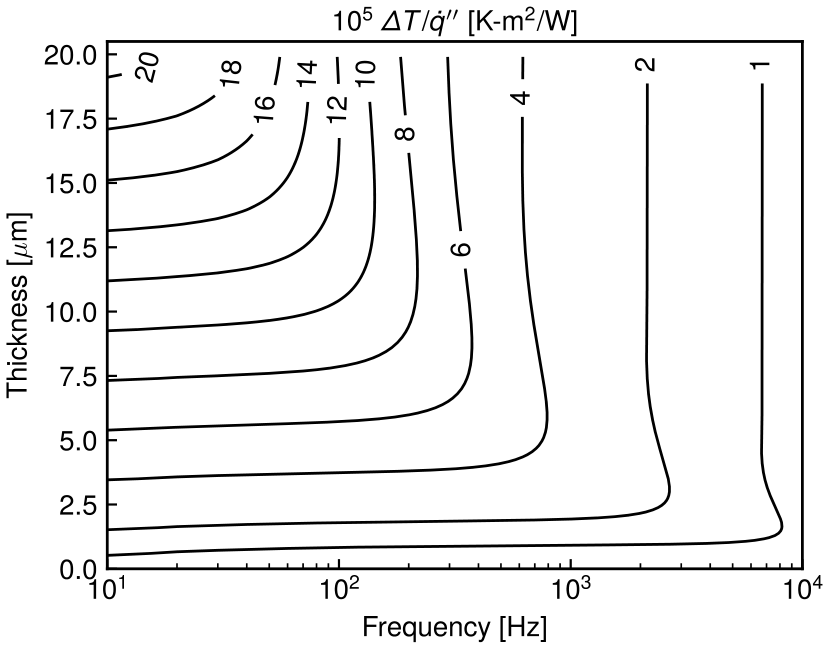
Designing the Sensor
Thickness buys signal at low frequency and saturates at high frequency. The contours turn that trade into a thickness you can pick for a given application.
Selected work
- J.B. Ghandhi, J.B. Carlson, R. Bonazza, D. Thompson, K. Schnittker, J.B. Andrews and G. Koutsakis, “Rational design of an architected-wall surface temperature sensor for heat flux determination,” International Journal of Heat and Mass Transfer 267, 128982 (2026). 10.1016/j.ijheatmasstransfer.2026.128982
- G. Koutsakis and J.B. Ghandhi, “Analytical solution of unsteady heat conduction in multilayer internal combustion engine walls,” Applied Thermal Engineering 213, 118681 (2022). 10.1016/j.applthermaleng.2022.118681
- G. Koutsakis, G.F. Nellis and J.B. Ghandhi, “Surface temperature of a multi-layer thermal barrier coated wall subject to an unsteady heat flux,” International Journal of Heat and Mass Transfer 155, 119645 (2020). 10.1016/j.ijheatmasstransfer.2020.119645
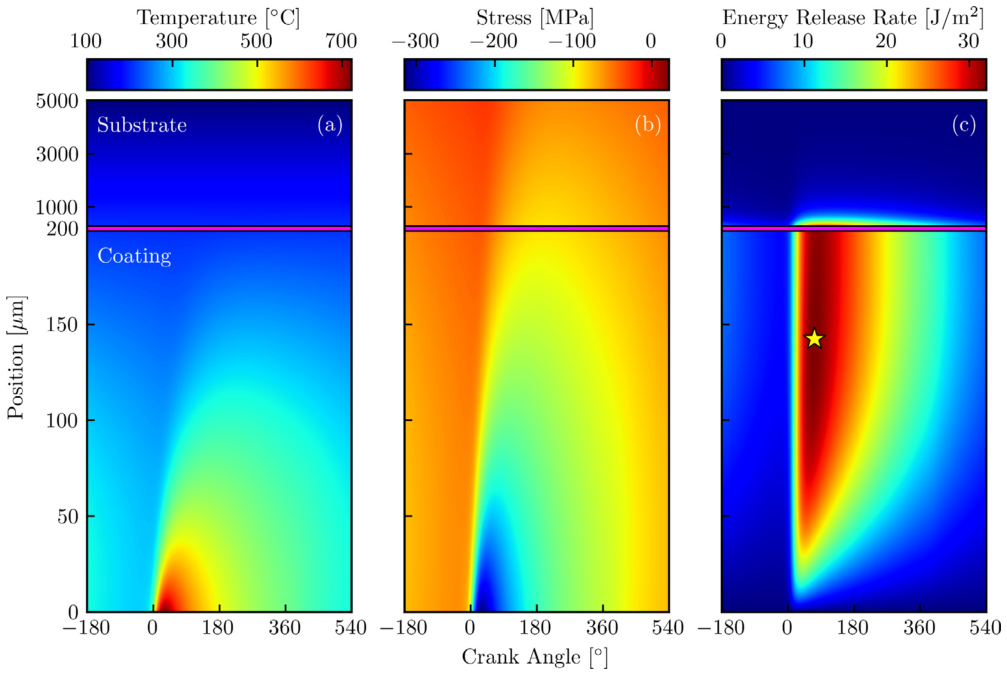
Temperature, stress, and crack driving force through a coated wall across a cycle. The peak energy release rate falls inside the coating, not at the interface — which is where the coating actually fails.
A thermal barrier coating is asked to insulate and to survive, and the two goals fight each other. Thicker and less conductive means a hotter surface, a steeper gradient, and more stored elastic energy available to drive a crack. A coating that insulates beautifully for one firing and spalls on the hundredth has not solved the problem.
We treat durability as a fracture problem rather than a thermal one. Transient conduction gives the temperature field, thermoelasticity gives the stress, and an energy release rate compared against the measured toughness says whether and where a delamination will run.
Our work in this area includes:
- Fracture-based durability analysis: Time-resolved energy release rate through the coating thickness, predicting the depth at which delamination initiates rather than only whether the coating insulates.
- Delamination in real engines: Model predictions checked against coatings run to failure on high-output reciprocating engines.
- Architecture optimization: Ranking coating thickness and property combinations on performance and durability together, over a full drive cycle rather than a single operating point.
- Coatings under detonation: Extending the same framework to the far higher frequencies and heat fluxes of a rotating detonation environment.
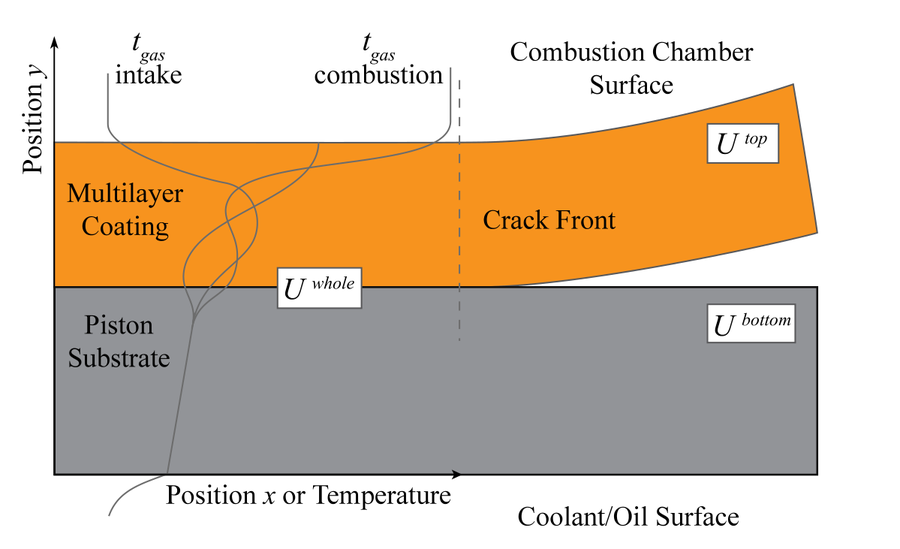
Delamination Mechanics
Comparing the stored elastic energy of the intact wall against the cracked configuration gives the driving force for delamination — the quantity that has to stay below the interface toughness.
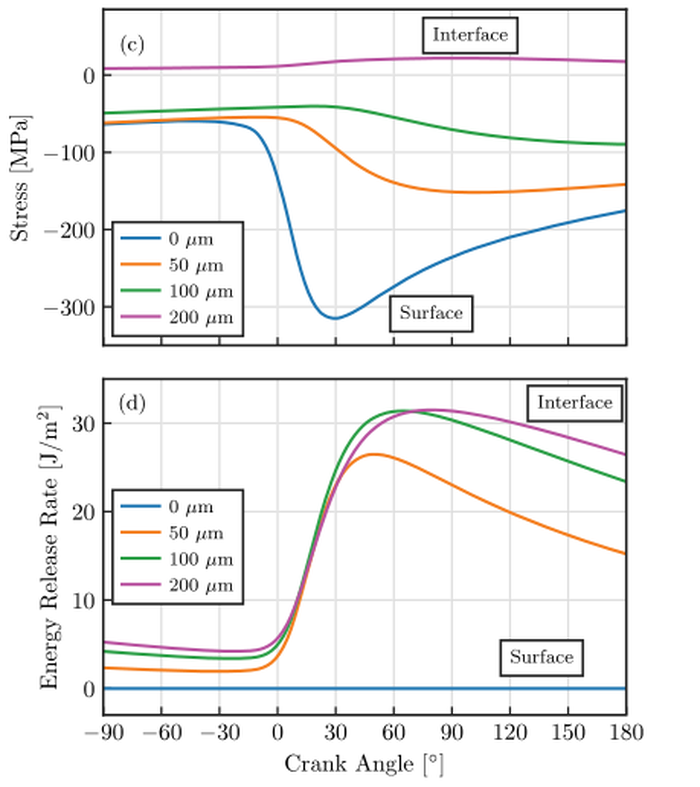
Through the Cycle
The surface goes into deep compression at combustion while the interface barely moves. The crack driving force peaks well after the heat flux does, and it grows with depth.
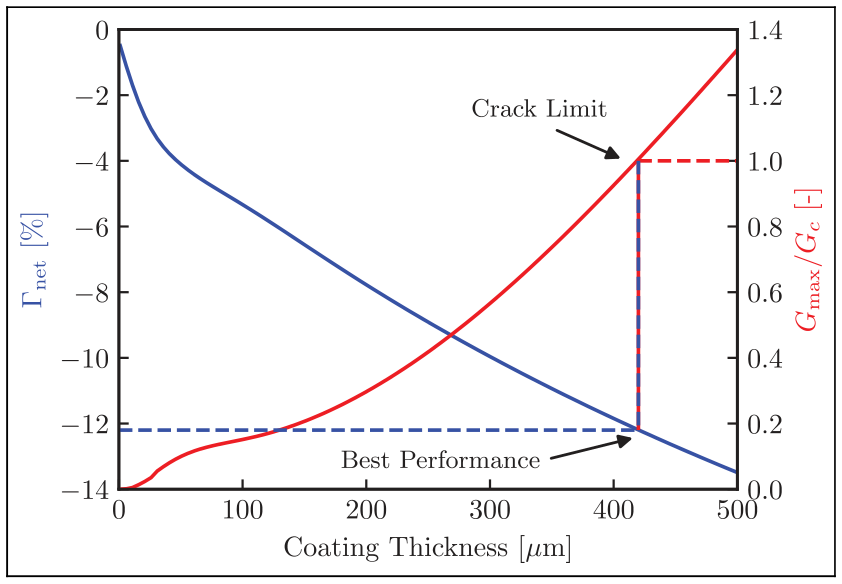
Performance Against Life
Thicker coatings insulate better right up until they crack. Plotting both curves together puts the useful design window between them, rather than at either extreme.
Selected work
- G. Koutsakis, M.R. Begley, J.W. Hutchinson and J.B. Ghandhi, “Fracture-based transient thermo-mechanical analysis of reciprocating engine thermal barrier coatings,” Engineering Fracture Mechanics 270, 108568 (2022). 10.1016/j.engfracmech.2022.108568
- G. Koutsakis and J.B. Ghandhi, “Optimization of thermal barrier coating performance and durability over a drive cycle,” International Journal of Engine Research (2022). 10.1177/14680874221089072
- G. Koutsakis et al., “Delamination Failure on High-Output Diesel Engine Thermal Barrier Coatings,” SAE Technical Paper 2022-01-0440 (2022). 10.4271/2022-01-0440
- G. Koutsakis, P.C. Miles and J.B. Ghandhi, “Assessment of In-Cylinder Thermal Barrier Coatings over a Full Vehicle Drive Cycle,” SAE Technical Paper 2021-01-0456 (2021). 10.4271/2021-01-0456
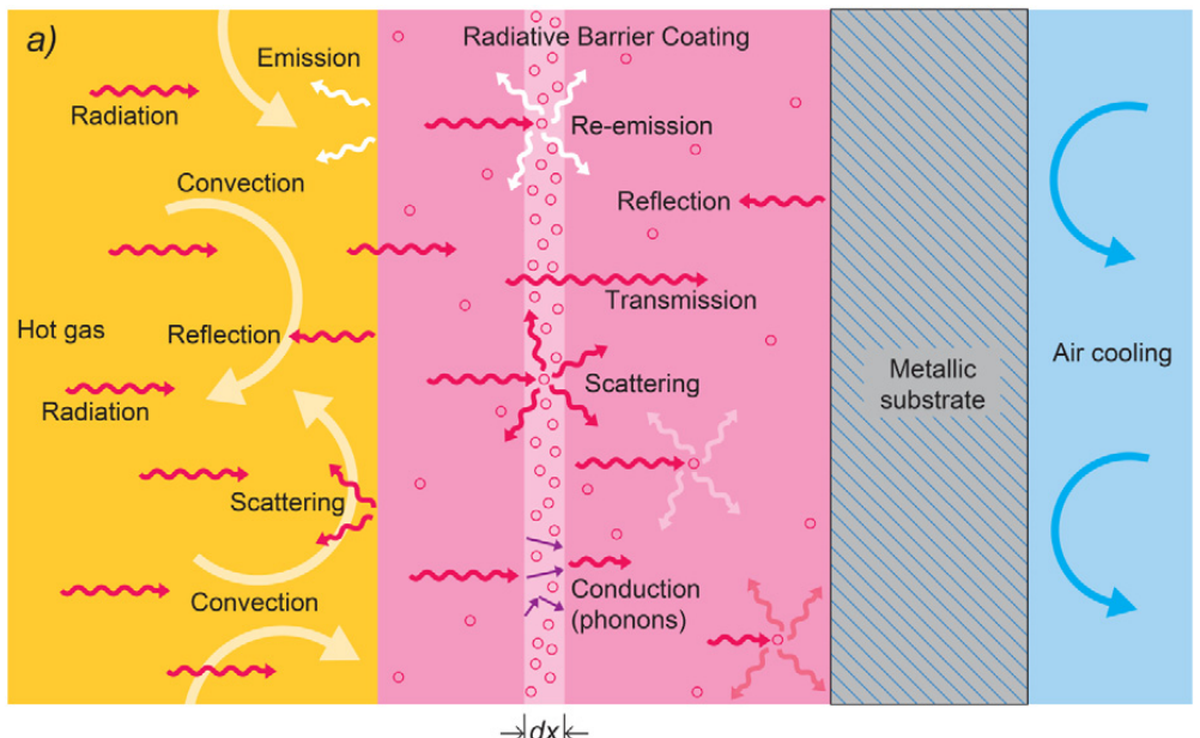
Current barrier coatings are translucent across most of the thermal radiation spectrum. Radiation is absorbed, scattered, re-emitted, and only partly converted to heat where you want it.
As combustion temperatures rise, an increasing share of the heat load arrives as radiation rather than convection. This is a problem for the coatings currently in service: yttria-stabilized zirconia and gadolinium zirconate are nearly transparent from roughly 0.5 to 6.5 µm, which is exactly where a 2000–2500 K gas does most of its radiating. Thermal conductivity, the property those coatings were selected on, does not help.
So we treat the coating as an optical component as well as a thermal one, and ask what absorption and scattering properties would actually lower the temperature at the coating–alloy interface. The same question, inverted, governs fibrous insulation: there the goal is to reflect the radiation before it ever enters.
Our work in this area includes:
- Radiation barrier coatings: Two-flux spectral modeling of combined radiative and conductive transport, identifying the absorption–scattering combinations that reduce interface temperature.
- Spectrally selective absorbers: Rare-earth doped zirconates for narrow-band absorption, and broadband "black" oxides that absorb across the radiation window.
- Reflective fibrous insulation: Monte Carlo radiative transfer through fiber mats, and the design metrics that follow from it.
- Design rules from microstructure: A Kuhn scattering length borrowed from polymer physics, and a fiber size metric that sets the optimal radius directly from the source temperature.
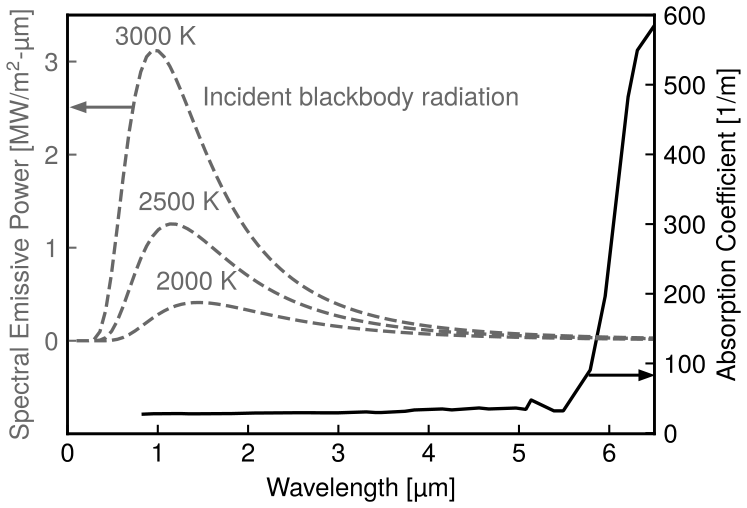
The Optical Gap
A hot gas radiates almost entirely below 6 µm. That is exactly where today's coatings barely absorb at all — so the radiation passes through the barrier and into the alloy.
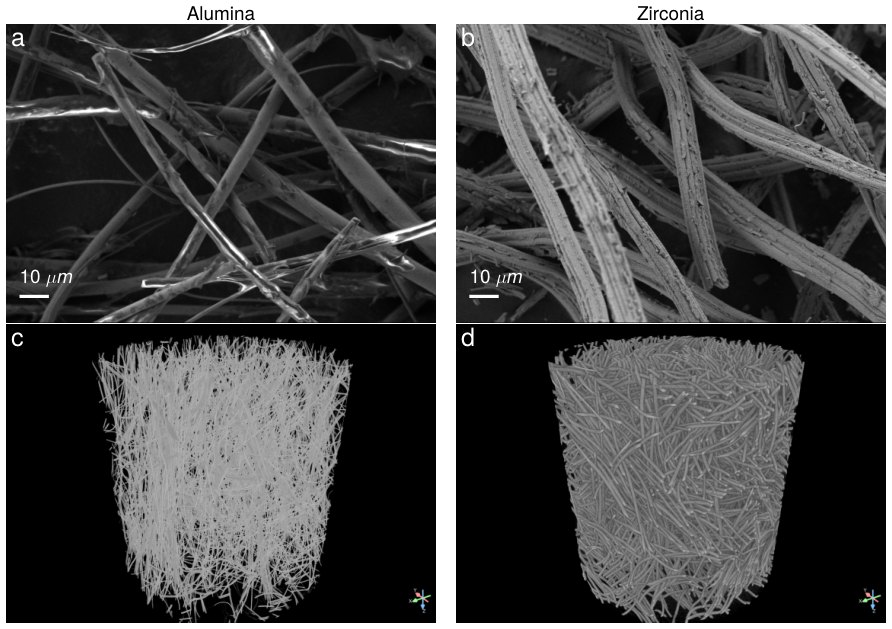
Real Fiber Mats
Electron microscopy and micro-CT give the fiber radius distribution and orientation that the scattering model needs, and show the non-idealities — curvature, roughness, fragments — that the model does not.
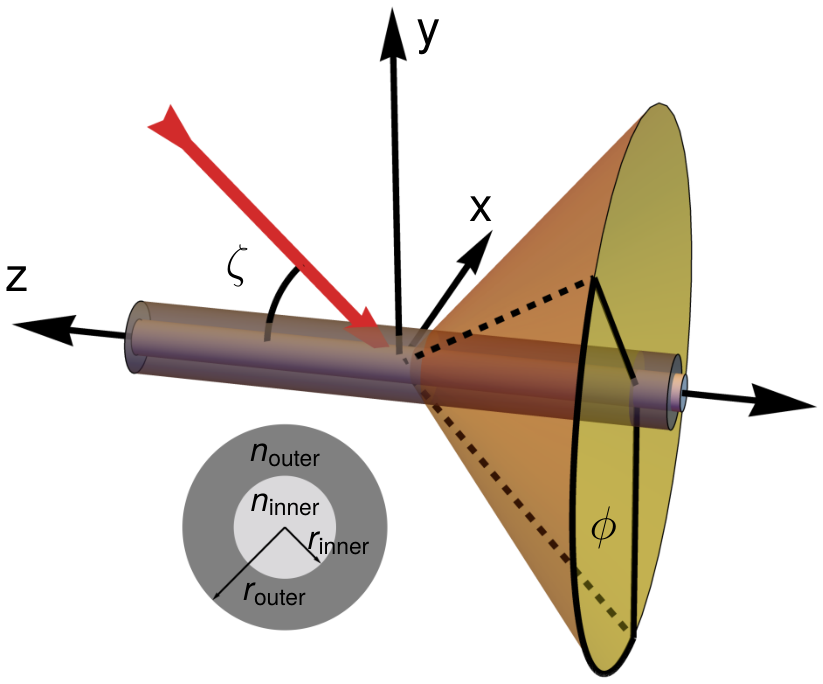
Scattering from a Fiber
A fiber scatters into a cone set by the incidence angle, and coated fibers can be collapsed onto an effective refractive index. Single-fiber behavior is what the mat reflectance is built from.
Selected work
- G. Koutsakis and D.R. Clarke, “Optical absorption effects in thermal radiation barrier coating materials,” Surface and Coatings Technology 487, 130974 (2024). 10.1016/j.surfcoat.2024.130974
- G. Koutsakis, N. Deliwala and D.R. Clarke, “Design Metrics for Highly Reflective Fibrous Insulation,” Advanced Materials Technologies 9, 2401000 (2024). 10.1002/admt.202401000
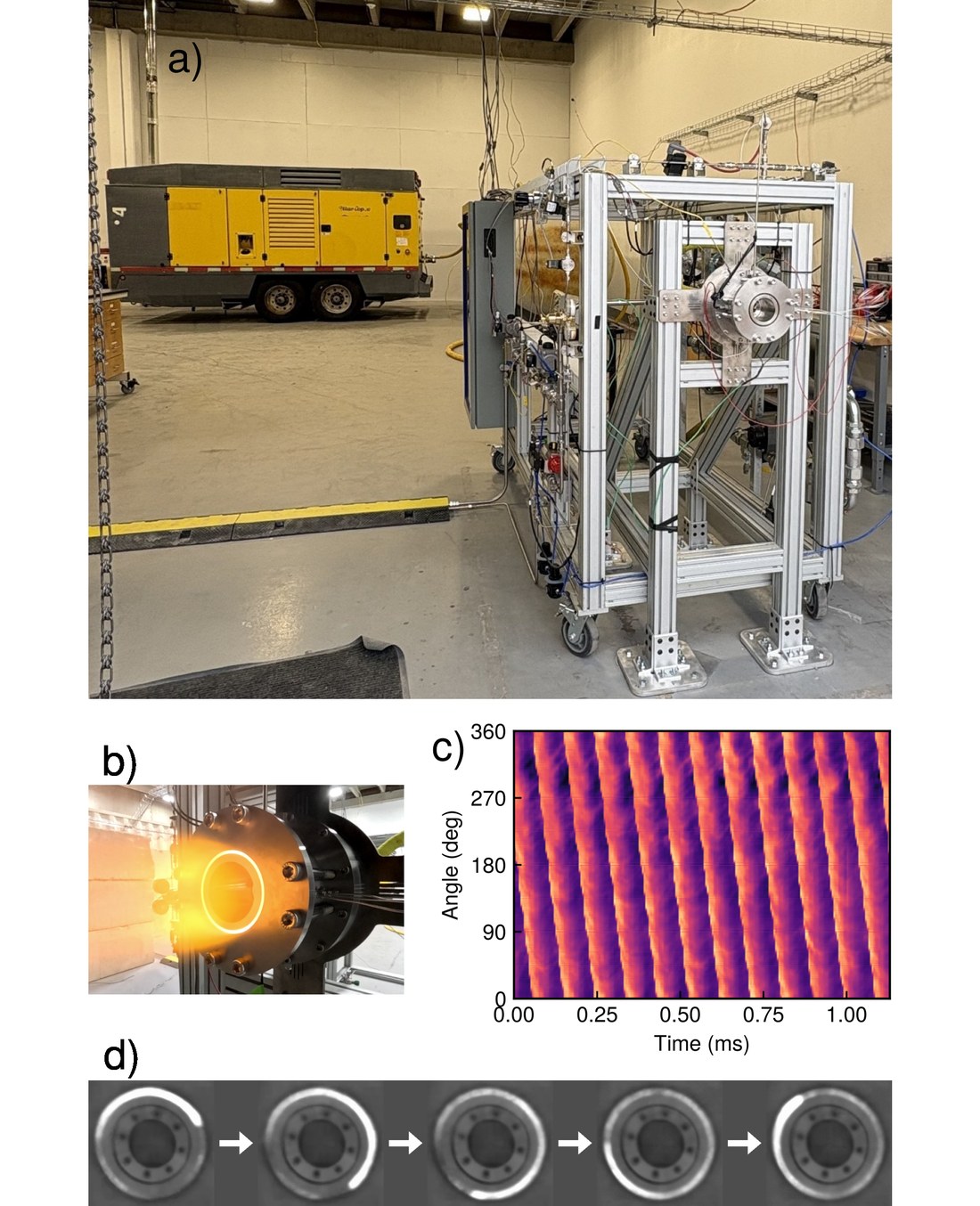
(a) The HADES test stand and air supply in the high bay. (b) The engine during a hot fire. (c) Detonation wave angle against time, showing a stable single wave. (d) High-speed imaging of the wave circling the annulus.
The lab operates out of a dedicated high-bay space at 2420 Alamo Ave SE in Albuquerque, a few minutes from UNM's main campus. It is built around HADES (Hot and Durable Engine System), a rotating detonation engine configured as a materials testbed: the purpose is not to optimize the thermodynamic performance, but to put candidate wall materials into a real detonation environment and measure what happens to them.
Because the walls are swappable and the operating point repeatable, materials can be compared on equal terms — which is the part that is normally missing when coatings are evaluated in different engines at different conditions.
Capabilities include:
- HADES rotating detonation engine testbed: Fuel-agnostic air breathing operation with instrumented, swappable wall sections for materials evaluation.
- Thermal instrumentation: Calorimetric heat flux measurement, embedded thermocouples, and thin-film surface temperature sensors for high-rate transient loading.
- High-speed diagnostics: Imaging and high-rate pressure acquisition to resolve wave number, wave speed, and stability across a hot fire test.
- Forced-convection flow loop: A separate instrumented rig for measuring friction and heat transfer in additively manufactured cooling channels.
- Sample preparation and post-test analysis: Materials evaluation of coated and multilayered specimens before and after exposure.
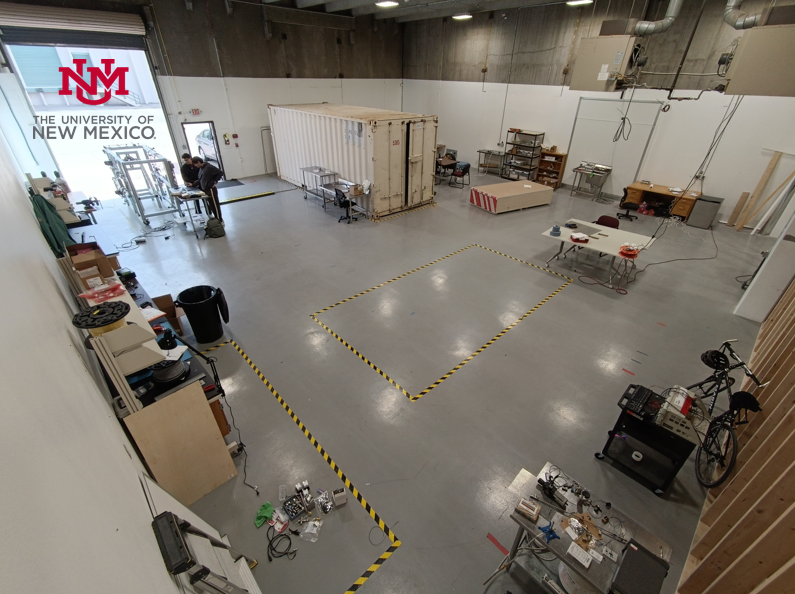
High-Bay Test Space
A dedicated off-campus facility sized for engine testing, with the standoff and services that HADES requires.
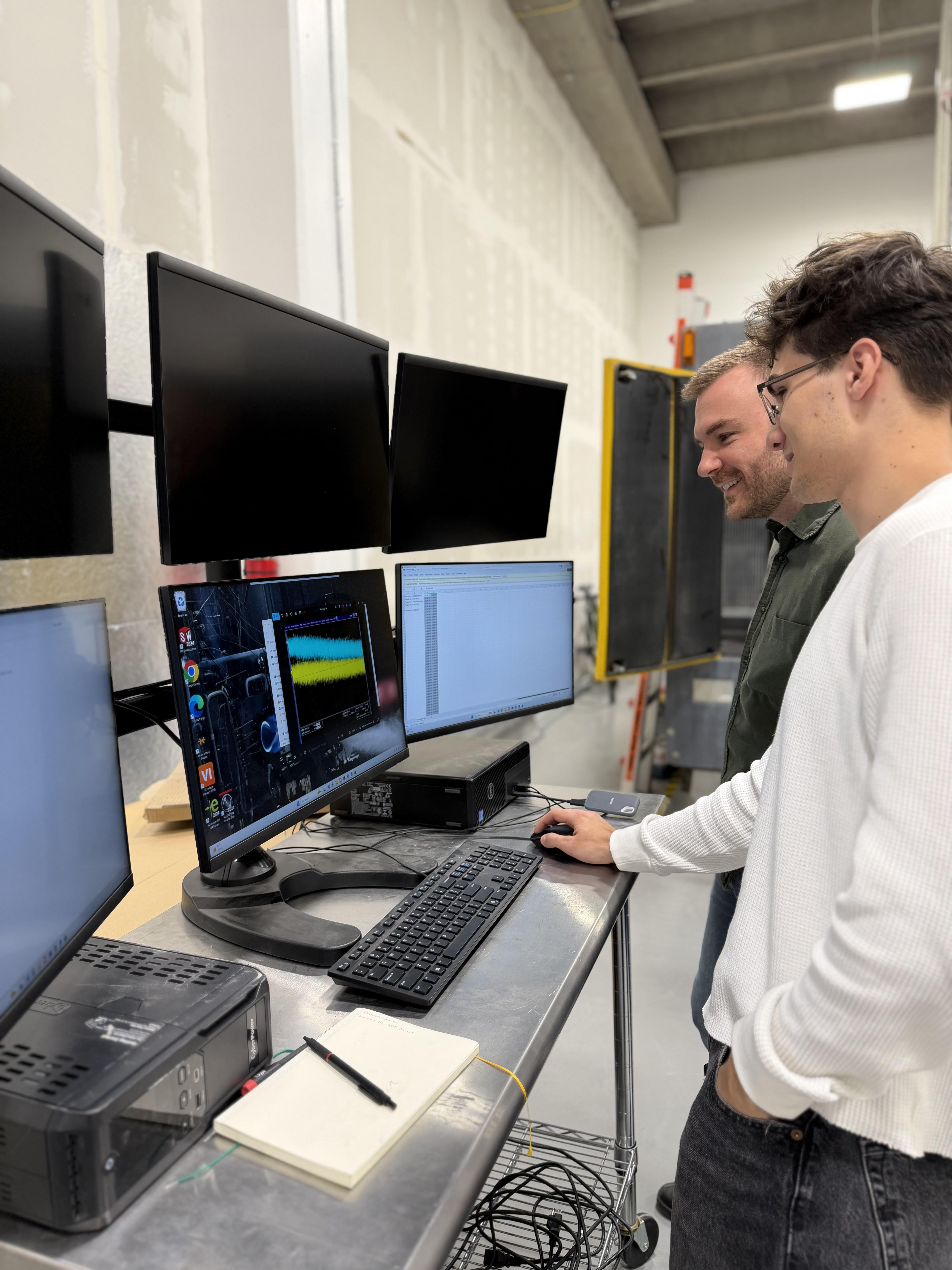
Instrumentation & DAQ
Students run the acquisition chain end to end, from sensor installation on the test article to reduction of the resulting heat flux and pressure data.
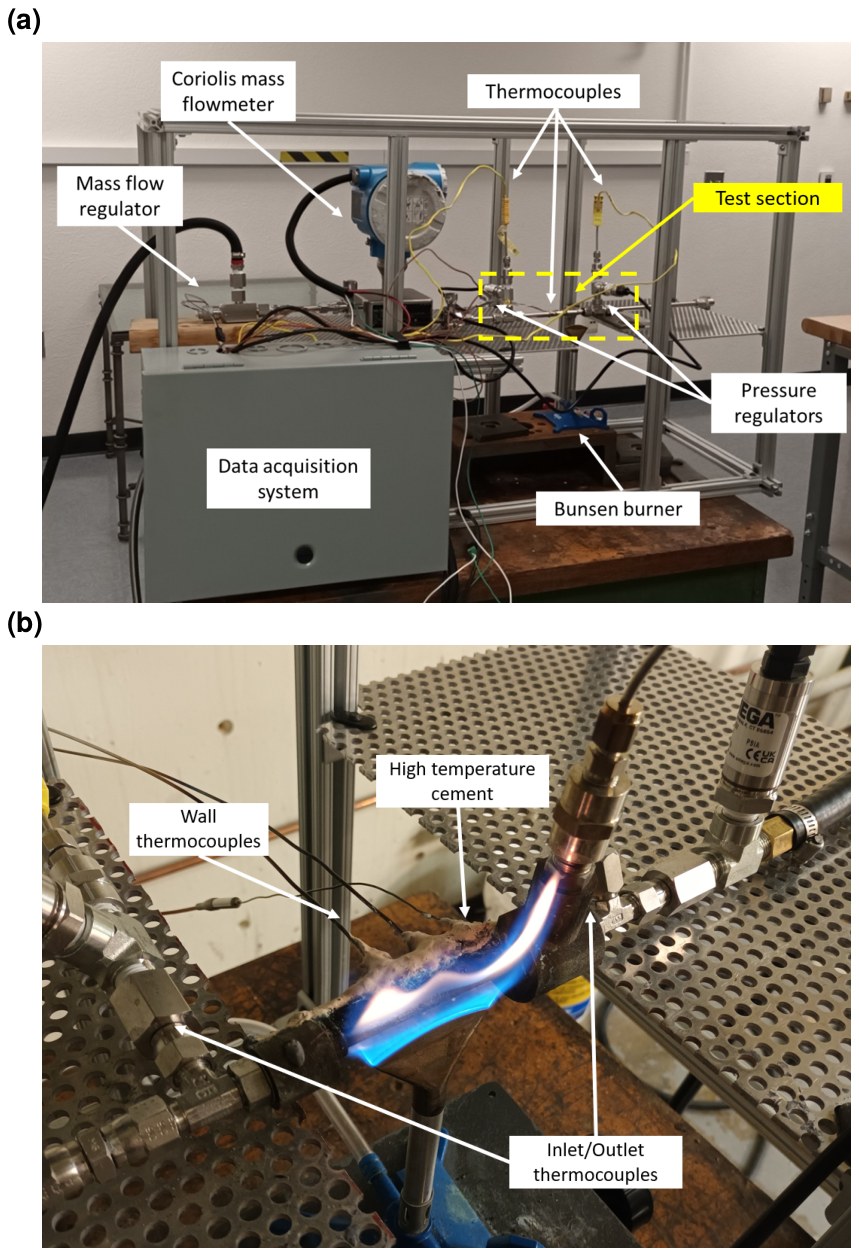
Convection Test Rig
A forced-convection loop for additively manufactured cooling channels. Coriolis-metered flow, instrumented inlet and outlet, and a burner-heated test section give friction and heat transfer data for channels as they are printed, roughness included.